
Combining Height Development Patterns with Scientific Exercise and Nutrition
Section 1 Factors Affecting Height
Height and weight indicators not only reflect a child's growth and development but also correspond to the development of various tissues and organs in the body. Height refers to the length and proportion of the body's longitudinal parts, originating from longitudinal growth and significantly influenced by genetic factors. In males, ossification of the long bones of the limbs and vertebrae is completed between the ages of 20 and 24, and in females between 19 and 23, height growth ceases.
Many factors influence height, such as heredity, nutrition, physical activity, environment, lifestyle, race, endocrine system, age of sexual maturity (those with menarche at 18 are on average 5 cm taller than those at 11), consanguineous marriage, and medical advancements.
I. Heredity
Among the many known factors influencing height, heredity is relatively important.
The development of the human body from a single-celled fertilized egg into a complex multicellular individual, and from a tiny fetus into a robust individual, is controlled by genetic factors. Heredity and race not only influence a child's height, weight, and body shape, but also significantly affect endocrine development.
The heritability of height is as high as 0.75–0.82, especially for daughters, where it ranges from 0.85 to 0.92. This means that 75% of a boy's height and 92% of a girl's height are influenced by genetic variation. Only 25% of a boy's and 8% of a girl's height are determined by other environmental factors. This demonstrates the crucial role of heredity in a child's height. In contrast, weight is less influenced by genetics, with 63% of a boy's and 42% of a girl's weight determined by heredity. 37% of a boy's and 58% of a girl's weight are determined by environmental factors. This shows that the environment has a significant impact on weight.
II. Nutrition
Nutrition is an essential material basis for human survival, maintaining normal life, developing the body, and engaging in activities. Especially during the two peak periods of growth and development, ensuring a sufficient supply of high-quality nutrition and maintaining a balance of vitamins and minerals (calcium, phosphorus, zinc, etc.) is crucial. Children in Chinese cities are on average 2-4 centimeters taller than their rural counterparts, partly due to better nutrition in cities. Taking protein as an example, height is largely determined by nutrition, particularly protein. There are approximately 20 amino acids known to exist in the human body and in nature, and these amino acids, which make up proteins, must be provided by nutrition. Food providing sufficient amounts of the eight essential amino acids helps accelerate protein synthesis, thereby promoting the growth and development of various tissues and organs, especially bones and epiphyseal cartilage. For example, in a Japanese experiment involving six pairs of twins, the first group received normal nutrition, while the second group received normal nutrition supplemented with lysine. After 13,200 hours, the second group was found to be 1.7 centimeters taller and 1 kilogram heavier than the first group. Experiments on school-aged children have shown that the group whose bread was supplemented with 0.5 grams of lysine at each meal had significantly higher height and weight than other school-aged children. In some countries, 25 grams of soy flour and appropriate amounts of calcium, iron, and vitamins are added to children's lunch bread. Six months later, these children weighed 2.62 kg more, were 0.9 cm taller, and had 3.4 grams more hemoglobin than children eating a regular diet. This is because protein is not only the "building material" of the human body, but also an important substance involved in important physiological activities such as enzymes, hormones, hemoglobin, myosin, and collagen, which forms the body's framework. Similarly, the mother's nutritional status also restricts the normal development of the fetus to a certain extent. A lack of certain nutrients in the diet can cause birth defects.
Malnutrition affects both growth and development, as well as the quantity and quality of brain cells; conversely, overnutrition leads to obesity, which is also detrimental to children's physical and mental health.
III. Physical Exercise Among the many acquired factors affecting height, the most positive and effective factor is physical exercise. Muscle weakness is a major factor affecting children's physical development. More exercise is a physiological need for children and adolescents to grow taller. Therefore, physical exercise is a crucial driving force for children's healthy growth. Numerous domestic and international surveys have demonstrated that children who consistently exercise, compared to their peers who do not exercise or lack exercise, show increases in chest circumference (5-8 cm), lung capacity (500-1500 ml), and grip strength (4.6-5.7 kg). Consistent exercise contributes to children's growth and development. For example, data from a primary school in Liaoning (Table 5-2) shows that students who regularly participate in school or youth sports training programs are, on average, 4 cm taller, 2 kg heavier, and have 200 ml greater lung capacity than other students. Children in the far north of the former Soviet Union, experiencing the polar night without sunlight, exhibit low activity levels. Although they are tall and have large frames, they suffer from poor stamina and endurance. Compared to their southern counterparts, they have 8 kg less grip strength, 9 cm less long jump performance, and 3 cm less high jump performance. All of this proves that physical exercise not only promotes growth but also improves physical function and athletic performance.
Taking the influence of environmental conditions (the sum of all natural factors surrounding humans in the human ecosystem) such as climate and geographical environment on height as an example, generally speaking, children in tropical and temperate zones reach sexual maturity earlier and have slightly lower levels of physical development; children in cold zones reach sexual maturity later and have relatively better levels of physical development. A 1975 survey by the Institute of Pediatrics of the Chinese Academy of Sciences analyzed the average height (in centimeters) of 17-year-olds and found that for males, the average height was 168.7 cm in Beijing, 167.8 cm in Wuhan, and 164.7 cm in Guangzhou; for females, the average height was 157.7 cm in Beijing, 157.3 cm in Wuhan, and 155.3 cm in Guangzhou. A 1982 survey in my country on the body shape, physiological function, and physical fitness of children and adolescents showed that children aged 7-17 in Beijing were 2.5-4.6 cm taller than their counterparts in Hunan. Both of the above surveys demonstrate a trend of height disparity among Chinese children, with taller children in the north and shorter in the south. This trend is not only related to food variety but also directly influenced by factors such as climate, geographical location, and duration of sunlight exposure.
Psychological factors also affect growth and development. Psychological factors can be considered the sum of emotions; the seven emotions—joy, anger, sorrow, happiness, grief, fear, and shock—are expressions of these emotions. The world of emotions is diverse, and the feelings evoked by objective things—happiness, pleasure, or sadness, pain, and disappointment—directly affect all human activities. Sudden, intense, and prolonged emotional stimuli can affect the function of the body's internal organs, blood circulation, brain, and endocrine system. Sadness, depression, and suppressed anger
can easily lead to various illnesses in children, thus affecting their growth and development. Clinical observations have shown that children who have experienced severe mental stress are not only prone to various diseases but also experience delayed or even stagnant growth and development, resulting in premature aging. This is the result of adverse psychological factors affecting the function of the brain and endocrine system. Therefore, it is essential to create a positive psychological environment for children, especially by providing warmth, love, and care to them through positive guidance and support, ensuring they receive necessary and normal psychological fulfillment, feel mentally enriched, have a happy mood, and grow up healthily in body and mind.

Is obesity a major risk factor for diabetes? Can scientific weight loss reduce the incidence rate?
This article, based on epidemiological studies, reveals the close link between obesity, especially central obesity, and non-insulin-dependent diabetes mellitus (NIDM). Data shows that individuals with a high BMI have a significantly increased risk of developing the disease. Understanding this risk motivates action, and scientific weight loss can effectively reduce the incidence of diabetes. Weight control is a key measure for achieving healthy weight loss and preventing chronic diseases.
2026-03-17
How to treat obesity-related diabetes? Scientific weight loss and medication selection are key.
This article details treatment methods for obesity-related non-insulin-dependent diabetes mellitus, including core dietary therapies and medication selection principles. Breaking the insulin resistance cycle through scientific weight loss is key to controlling blood sugar and improving blood lipids. Mastering these methods can effectively achieve healthy weight loss and aid in diabetes management.
2026-02-28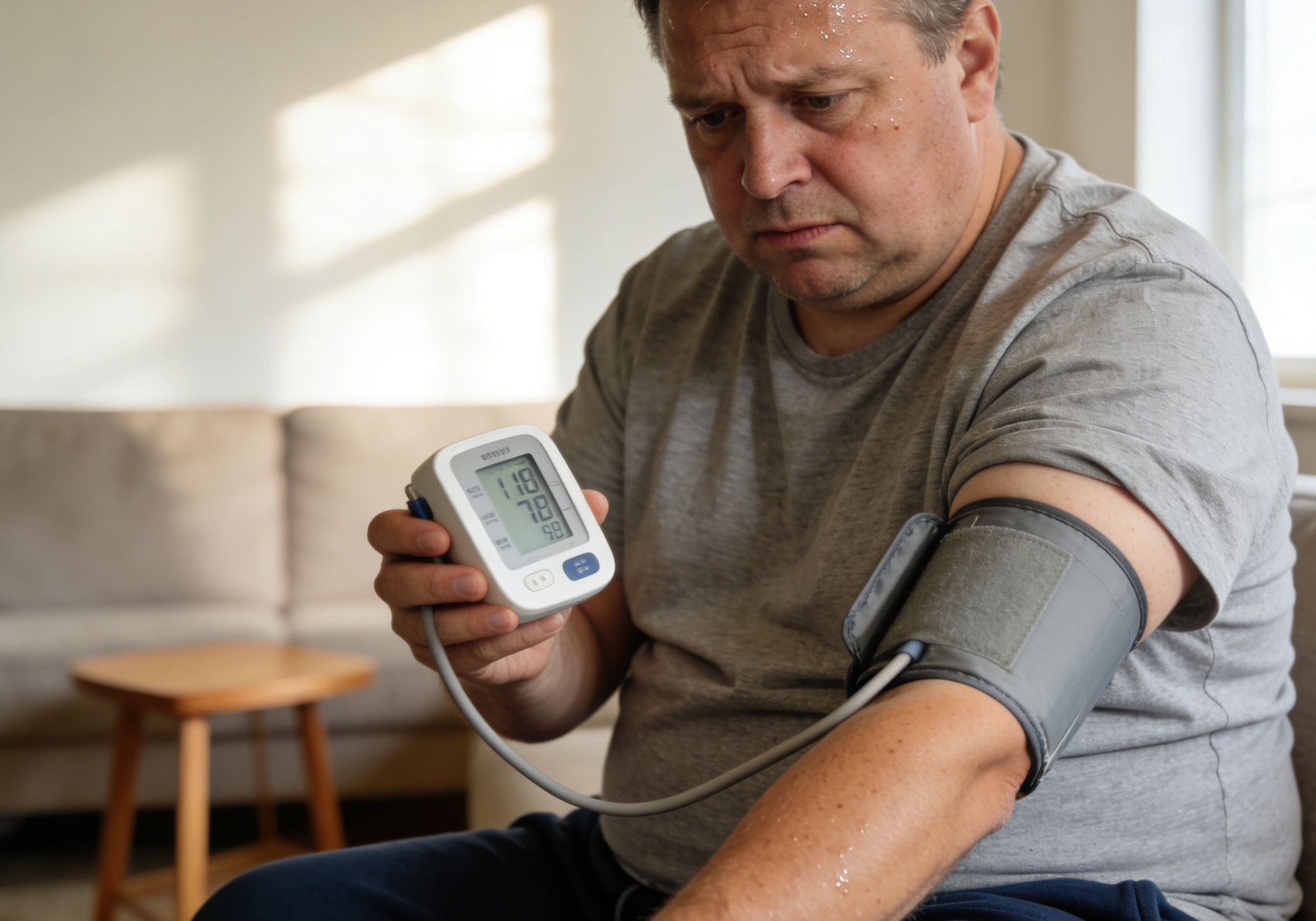
How does obesity lead to hypertension? An analysis of blood volume and hormone mechanisms.
This article explores the close link between obesity and hypertension, revealing that obesity may lead to elevated blood pressure through mechanisms such as increased blood volume and hyperinsulinemia. Understanding the mechanisms by which obesity affects blood pressure helps to recognize the importance of weight control for cardiovascular health. Not all obese individuals will develop hypertension, but their risk is significantly increased.
2026-03-17