
Weight Loss and Belly Slimming: Understanding the Dangers of Obesity and Scientific Fat Reduction for Health and Longevity
Accelerating Aging and Shortening Lifespan
Modern medical research reveals that obese individuals have a lifespan 5 to 20 years shorter than those of normal weight. For example, a 35-year-old man whose actual weight exceeds the standard weight by 10% will live 4.7 years less; over 20%, possibly 9.08 years less; and over 30%, possibly 15.26 years less. A 40-year-old woman whose actual weight exceeds the standard weight by 10%, 20%, or 30% may live 3.3, 7.7, or 11 years less, respectively.
Experts specializing in obesity research at Shanghai Xiangshan Hospital concluded that childhood obesity shortens lifespan by 10 years; while obesity in middle-aged people (around age 45) shortens lifespan by 4 years.
A survey by a British life insurance company showed that overweight individuals due to excessive eating have a lifespan 3.6 to 15.1 years shorter than those of normal weight. Overeating inevitably increases the burden on digestive organs and tissues such as the stomach, intestines, liver, spleen, and pancreas, as well as the burden on the brain's gastrointestinal nerves and food center that control digestion and absorption. This is likely why American insurance companies refuse to insure obese individuals whose actual weight exceeds the standard weight by more than 30% (degree of obesity).
"There are no obese centenarians." Why do obese people have shorter lifespans? From a medical and physiological perspective, compared to obese individuals, those with lower body weight have a smaller body surface area, a 20-30% higher basal metabolic rate, and their cardiovascular and respiratory systems supply 25-33% more blood and oxygen per unit of body weight. Sufficient blood oxygen provides superior conditions for maintaining physical and mental health and prolonging life.
This is likely the key reason why obese patients have shorter lifespans while people of normal weight can live longer.
Co-occurs with multiple diseases. From a medical perspective, obesity is a metabolic disease. Obese individuals often have high cholesterol levels in their blood, which can easily lead to metabolic disorders and increase the incidence of cardiovascular disease, diabetes, gallstones, and other diseases. A study conducted over eight years by Brigham and Women's Hospital in Boston, involving 11,600 women aged 30-55, showed that women who were 10% overweight had a 30% higher rate of heart disease than those who were underweight; women who were 15-29% overweight had an 80% higher rate; and those who were more than 30% overweight had a 230% higher rate. The cause of this is attributed to excess body fat. Modern medical research has shown that obese individuals have a 9-11 times higher incidence of myocardial infarction than those of normal weight. The incidence of hypertension is 9 times higher in obese individuals (10.3% for those 10% overweight, 19.1% for those 10-20% overweight, 55.6% for those 30-50% overweight, and only 5.5% for those below standard weight). This shows that the greater the obesity, the higher the incidence of hypertension. The main reason for the high incidence of hypertension in obese patients is excessive body fat, which increases oxygen consumption, leading to a compensatory increase in blood volume and stroke volume. The incidence of diabetes is 7 times higher, and 80-90% of diabetic patients are caused by obesity. The incidence of gallstones is 8 times higher, the incidence of atherosclerosis and coronary artery disease is 2 times higher, and the incidence of ischemic heart disease is 1.5 times higher. Surveys in Beijing also demonstrate the high incidence of these diseases, with obese individuals having a 2-7 times higher incidence compared to those of normal weight. Obesity, due to excessive weight gain, increases the burden on the lower limbs, leading to joint problems and other ailments.
Childhood obesity is also highly prevalent. A sample survey conducted in several Chinese cities between 1985 and 1989 found that the incidence of obesity among children aged 0-4 was 1%, with higher rates in the north and cities than in rural areas. In particular, the incidence rate in large and medium-sized cities like Beijing, Shanghai, and Shijiazhuang was 1-2 times higher than the national average, with the incidence rate among children aged 10-12 reaching as high as 5%. The number of children seeking treatment for obesity at Beijing Children's Hospital in the past two years alone equaled the total number of patients in the previous 10 years.
Obesity is not only a breeding ground for many diseases but also a contributing factor to premature aging. Due to disordered fat metabolism, obesity not only exacerbates the complications caused by hyperlipidemia but also accelerates the aging process.
Impact on Learning, Work, and Life: Today's society has entered an era of electrification, automation, and information technology. Knowledge is exploding, its quantity is increasing, its cycle is relatively shortening, and the pace of production and life is accelerating, leading to fierce competition. Therefore, the times demand that all levels and types of talent possess a high degree of combined neural and muscular activity, thus placing higher and more comprehensive demands on talent quality. Obese individuals, due to fat accumulation in the abdominal cavity, cause the diaphragm to rise, restricting breathing and cardiac activity, resulting in shortness of breath. The greater the degree of obesity, the greater the burden on the heart, leading to impaired myocardial nutrition, weakened myocardial contraction, reduced stroke volume, and slower blood circulation. Therefore, obese individuals cannot withstand heavy physical activity. Most obese people have varying degrees of heat intolerance, excessive sleepiness, cravings, and a lack of physical activity. These habits not only affect learning and work efficiency and physical fitness but also impact mental vitality. Moreover, obesity causes numerous inconveniences in daily life, and some individuals become a burden to others, even a "burden." Walter Hudson (deceased), an American citizen known as the "Fat Commander of the World," weighed a staggering 1200 pounds (1 pound = 0.454 kg), equivalent to 544.8 kg, in October 1987. His chest circumference was 257 cm, waist circumference 262 cm, and knee circumference 135 cm. He was so obese that he couldn't even enter or leave his room, spending all his time lying on a specially made bed. It is said that once, when trying to leave his room, he became stuck in the doorway and couldn't get out until eight firefighters and paramedics were called to remove the doorframe.
Walter Hudson's obesity stemmed from two reasons: first, he broke his leg in elementary school and spent his time recuperating at home after graduating, lacking essential physical activity and exercise; second, he had a lifelong love of snacks. His sister, sympathizing with his pain, often bought him all sorts of snacks, and by the age of 12, he weighed 91 kilograms. This demonstrates that cultivating good habits of physical exercise and avoiding snacks from a young age are the primary conditions for preventing obesity.

A guide to calculating protein intake during weight loss: practical methods and tips.
This article explains the scientific standards for protein intake during weight loss, providing a formula for calculating daily requirements based on body weight and a practical "hand-size estimation" method. Adequate protein intake is crucial for boosting metabolism and maintaining muscle mass, forming the foundation for effective and healthy weight loss and preventing weight loss plateaus caused by protein deficiency.
2026-02-28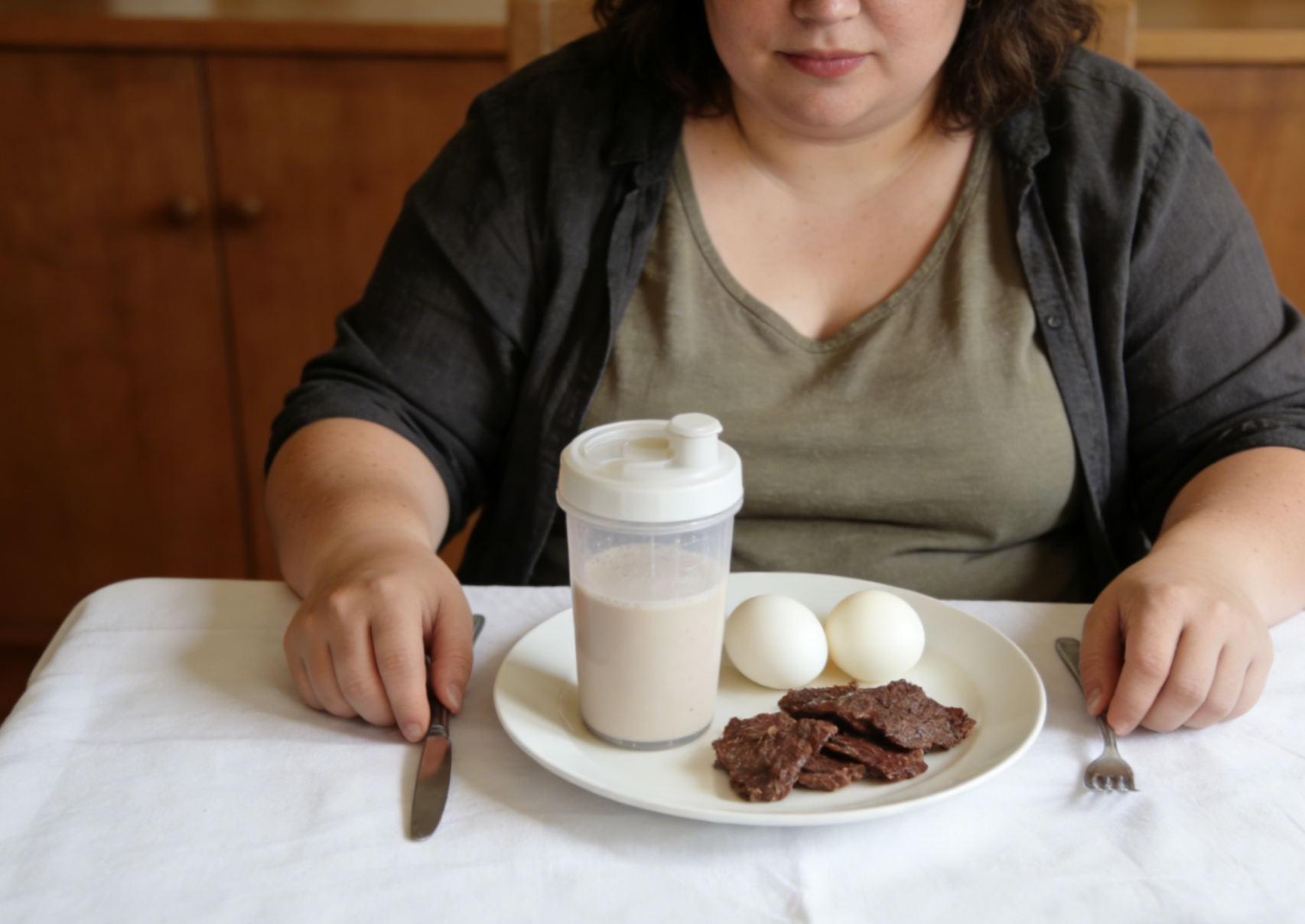
Recommended high-quality protein foods for weight loss: A comprehensive guide to eggs, meat, and seafood.
This article recommends high-quality protein foods such as eggs, meat, seafood, and dairy products, and provides a detailed analysis of their important role during weight loss. Adequate protein intake helps maintain muscle mass and boost metabolism, which is crucial for healthy weight loss, promoting efficient fat reduction and nutritional balance.
2026-02-28
Olive Oil: How This Liquid Gold Can Aid in Scientific and Healthy Weight Loss
This article details the health benefits of olive oil, often referred to as "liquid gold," highlighting its antioxidant and anti-inflammatory properties that can improve metabolism and promote weight loss. It also provides a guide to selecting and storing extra virgin olive oil, helping readers achieve more effective weight loss goals through the scientific use of olive oil, balancing nutritional needs with fat reduction.
2026-03-01