
Weight Loss: Understanding Weight Fluctuations and Saying Goodbye to Scale Anxiety
How Scales Lie
“Don’t worry about the extra few pounds. Your weight fluctuates.”
How many times have you heard this from a doctor, nutritionist, or friend, especially when you stand on the scale before starting your workout at the gym in the evening?
Women are often given, or give themselves, numerous reasons for their weight fluctuations throughout the day or days. Here are some reasons women give us when they are surprised by the numbers on the scale.
“I ate too much for lunch.”
“My clothes weigh at least 5 pounds.”
“I need to go to the bathroom.”
“I ate too much salty food yesterday.”
“My shoes must weigh a ton.”
“I haven’t showered yet.”
What is the real impact of these reasons triggered by the numbers displayed on the scale? To find out, we conducted a small experiment. We selected a well-built woman who weighed 120 pounds. We asked her to weigh herself on the same scale under different circumstances throughout the day. Then, her weight varied from 118.5 to 126.5 pounds depending on the circumstances: before and after breakfast, wearing only underwear; after lunch, fully dressed and needing to urinate; and after urinating, wearing several layers of clothing.
**First thing after waking up, wearing underwear**
**After breakfast, wearing underwear**
**After lunch, fully dressed and needing to urinate**
**After lunch, just after urinating, without shoes**
**After lunch, after urinating, without shoes and a top:** 122.5 pounds
**After lunch, after urinating, wearing only underwear:** 121.75 pounds
The point of this story is: if your weight fluctuates within 8 pounds throughout the day, it's not your fault. It could be due to the time of day, clothing, or other factors, such as drinking too much water due to salty food at the last meal.
For the best data, you should weigh yourself at the same time each day on the same scale, wearing the same clothes and with the same amount of food in your stomach.
Fruit: One medium-sized apple, banana, or orange; half a cup of cut, cooked, or canned fruit; or 3/4 cup of fruit juice.
Vegetables: One cup of fresh leafy greens; half a cup of other vegetables (cooked or raw and cut); or 3/4 cup of vegetable juice.
Quick Cereals: One and a half bagels; one slice of bread; 3/4 cup of instant oatmeal; half a cup of cooked cereal, rice, or pasta; or 3 cups of popcorn.
Protein: One ounce of cooked lean meat, poultry, or fish; one egg; half a cup of cooked beans; three ounces of tofu; or two tablespoons of peanut sauce.
Advantages: This diet is simpler and more practical to follow; for example, when you eat…
Between Women
She lost weight—by throwing away her scale
Danis Rios, an editor at a Sacramento newspaper, used to weigh herself constantly, worrying about the fluctuations in every pound. Eventually, she threw away the scale. Her weight began to drop. This is her story.
As I grew older, I weighed myself regularly, but it wasn't until college that the numbers I saw really bothered me. That was during my first year; I wasn't active and ate a lot. I got inflated. After that, my weight fluctuated. I got a boyfriend, lost weight, then gained it back after we got together. Ever since, I've been tracking numbers, weighing myself almost every day, sometimes even several times a day. If I gained two pounds, I'd go crazy for a while, drowning my sorrows in alcohol or going to the other extreme, not eating for days. At 21, dieting worked fairly well, but as I approached 30, my weight began to plateau.
My confidence hit rock bottom when I reached 167 pounds. That was 40 pounds more than my 5.1-foot frame could handle. I ended long-term relationships, fell in love with Louisiana crisps, and struggled to control my food intake due to my frustration with my weight. After that, I got a new job and moved back home, wanting to start a new life.
Around this time, I joined a weight watchdog group. There, I learned not to keep weighing myself, because it fluctuates for many reasons. Scales can be quite misleading and disappointing. So, I gave the scale to an aunt.
I felt finally liberated. I quickly realized my compulsive actions were self-fulfilling prophecy: the scale was telling me I was fat and unattractive, and that was how I was supposed to be. Without the scale, I started to see myself as less attractive, a healthy person after all.
Even today, living in the third-most obese city in the country, I'm still often drawn to the culinary delights of South Texas—and sometimes I succumb. But I've learned not to be bothered by my weight, to eat properly, and to exercise regularly. I've gone from a size 14 to a size 10, and I want to lose another size 1. I feel great now. I no longer have a scale, and I haven't weighed myself for months. I'm free!
When you eat a banana, you know you've eaten a serving of fruit. You don't need to weigh it and then look up its calorie and fat content in a book. Because the numbers involved are small, you can do the mental calculations; there's no need to keep a detailed food diary.
Disadvantages: This method doesn't take into account high-fat and high-calorie fruits, vegetables, and grains, such as eggplant, Parmesan cheese, pizza, and sautéed zucchini. It also doesn't consider body shape.
Recommendations: Of all the calculation methods, this is the best. It's the easiest to stick to and the most effective. Even if you continue to calculate food categories, it won't affect your enjoyment of life.

Weight Loss: Scientific Muscle Building, Boosting Metabolism, and Efficient Fat Burning for Body Shaping
By exercising large muscle groups and utilizing the supercompensation principle, this method builds muscle and strengthens the body, increasing basal metabolic rate to aid in weight loss. The more developed the muscles, the faster the fat burning, resulting in more noticeable weight loss effects.
2026-03-31
Follow Ten Principles of Muscle Training for Safe Muscle Building and Efficient Fat Burning
Training according to scientific muscle training principles, with reasonable intensity and time allocation, effectively builds muscle and boosts metabolism, aiding in weight loss. Scientific muscle training is safe and gentle, making weight loss more stable and efficient.
2026-04-01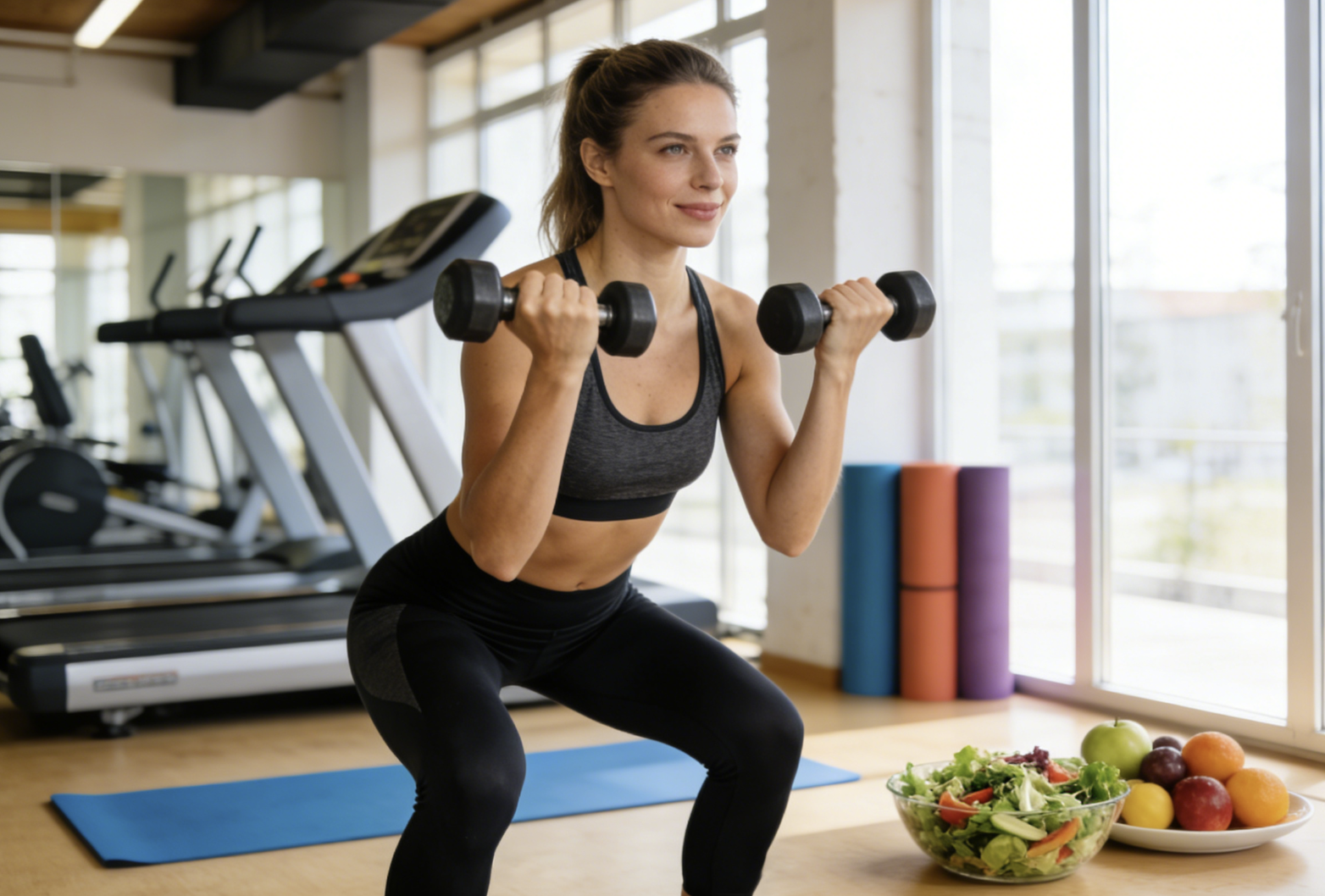
Understanding Muscle Strength Principles and Scientific Training to Improve Fat Burning Efficiency
Master the sources and training principles of muscle strength, rationally train large muscle groups to boost metabolism, aid in weight loss, safely build muscle without harm, and make weight loss more efficient and sustainable.
2026-04-01