
The Complete Guide to Weight Loss Through Walking and Jogging: Correct Posture and Scientific Training Methods
Walking for Weight Loss
With the advancement of science and social progress, many people use cars instead of walking, and often use elevators instead of stairs, which is one of the reasons for the increase in obesity. Walking has many advantages compared to other exercises. Walking is less likely to cause injury to the body, and it doesn't put extra strain on the body. It also doesn't require special learning or skills, allowing for safe and effective weight loss in a relaxed state of mind and body.
The correct posture for walking is to walk with your head held high and chest out, swinging your arms and legs as much as possible, without carrying anything in your hands, taking large strides, and keeping your whole body relaxed. Your toes should point straight ahead, and your heel should land first. Correct walking posture allows for full body movement and efficient fat burning, and a relaxed and confident walking posture will give dieters more confidence.
Now that we understand the benefits of walking for weight loss, how much walking is appropriate? Generally, you should walk at least 160 minutes per week. This not only helps burn fat effectively but also avoids injury from overexertion. For optimal weight loss results, the standard exercise amount for walking, taking a 40-year-old as an example, is to reach a pulse rate below 120 beats/minute and a slight sweat. Walk for about 30 minutes each time.
2. Jogging for Weight Loss
Jogging should be done in stages. Initially, the distance can be shorter, and then gradually increased over time.
(1) Before and after jogging, be sure to do full-body stretching and relaxation exercises to warm up your joints and limbs.
(2) When you first start jogging, you may feel some discomfort in your heart. You can alternate between running and walking until your heart adapts, repeating this until you sweat. Then, run back to your starting point in the same way.
(3) After a period of time, you will gradually adapt to jogging. The number of walking intervals will gradually decrease until you are jogging continuously. At this point, the time it takes to sweat will gradually increase, and the jogging distance will also gradually increase.
(4) Use a 3-day cycle for your exercise routine. Aim to increase your jogging distance by approximately 200 meters every three days. If you continue this, you'll soon be able to run about 2 km. After that, it will be easier to increase the distance further, until you reach 10 km.
(5) After gradually getting used to jogging, you should find the optimal speed that feels comfortable and doesn't cause fatigue, and then stick to that speed. A more ideal training method later on is to focus on time rather than distance, jogging for 20-40 minutes every day. Maintaining this for a period of time will yield certain weight loss results.
The following aspects should be noted during jogging:
① During jogging, try to breathe in a natural and rhythmic way. Avoid irregular breathing. Start with inhaling through the nose and exhaling through the mouth, gradually transitioning to breathing through both the nose and mouth simultaneously. Try to maintain full and smooth breathing to ensure sufficient gas exchange throughout the body. During running, you can consciously strengthen exhalation to promote inhalation, allowing a large amount of fresh oxygen to enter the lung tissue, thus achieving sufficient gas exchange and expelling waste gases from the body.
② Avoid running on your toes during jogging to prevent heel pain. You should land lightly on the balls of your feet first, and then gradually transition to landing on the entire sole of your foot to cushion the impact and prevent unexpected vibrations to the brain.
③ To enhance the regulatory function of the central nervous system and increase lung ventilation, you can adopt "Qigong-style jogging," which involves using abdominal breathing during jogging (the abdomen bulges during inhalation, causing the diaphragm to descend; the abdomen contracts during exhalation, causing the diaphragm to rise). The ideal ratio of inhalation to exhalation time is longer exhalation and shorter inhalation, while concentrating your thoughts on your breathing.
④ After jogging, wipe your body with warm water to allow metabolic products to be fully excreted through the sweat glands. It is strictly forbidden for exercisers to shower or wipe themselves with cold water. Drinking water or eating after running should only be done when your heart rate has returned to normal to avoid increasing the burden on your heart.
⑤ When starting out, strictly control the exercise volume, adhering to the principle of avoiding any localized pain. Some patients experience pain in the calves, soles of the feet, or heels after jogging. It is important to identify the cause of these symptoms promptly, correct incorrect running posture, and prevent the development of chronic strain. If the pain worsens, reduce the amount of exercise immediately or temporarily stop exercising for a few days until the pain subsides before resuming exercise. Pay attention to continuously improving your running technique, striving for coordination and ease.
⑥ For middle-aged and elderly obese individuals, "relaxed jogging" can be adopted. During jogging, try to make all the muscles and subcutaneous tissues of the body vibrate. This has the advantage of relaxing blood vessels, lowering blood pressure, and relieving muscle tension and fatigue, which is beneficial for muscle relaxation and overall weight loss.

Weight Loss: Reasonable Exercise Control for Scientific Fat Burning Without Harm
By monitoring your heart rate and controlling your exercise load, following the supercompensation recovery principle, you can safely enhance your training results, aid in weight loss, and scientifically plan your exercise for more stable and sustainable results.
2026-03-30
Weight Loss: Scientific Dietary Planning and Reasonable Meal Distribution for Easy Weight Control and Fat Reduction
Following the principles of a balanced diet, this method reasonably distributes calories across three meals, adjusts dietary structure, and aids in weight loss. Scientific eating without dieting makes weight loss healthier and easier to maintain.
2026-03-31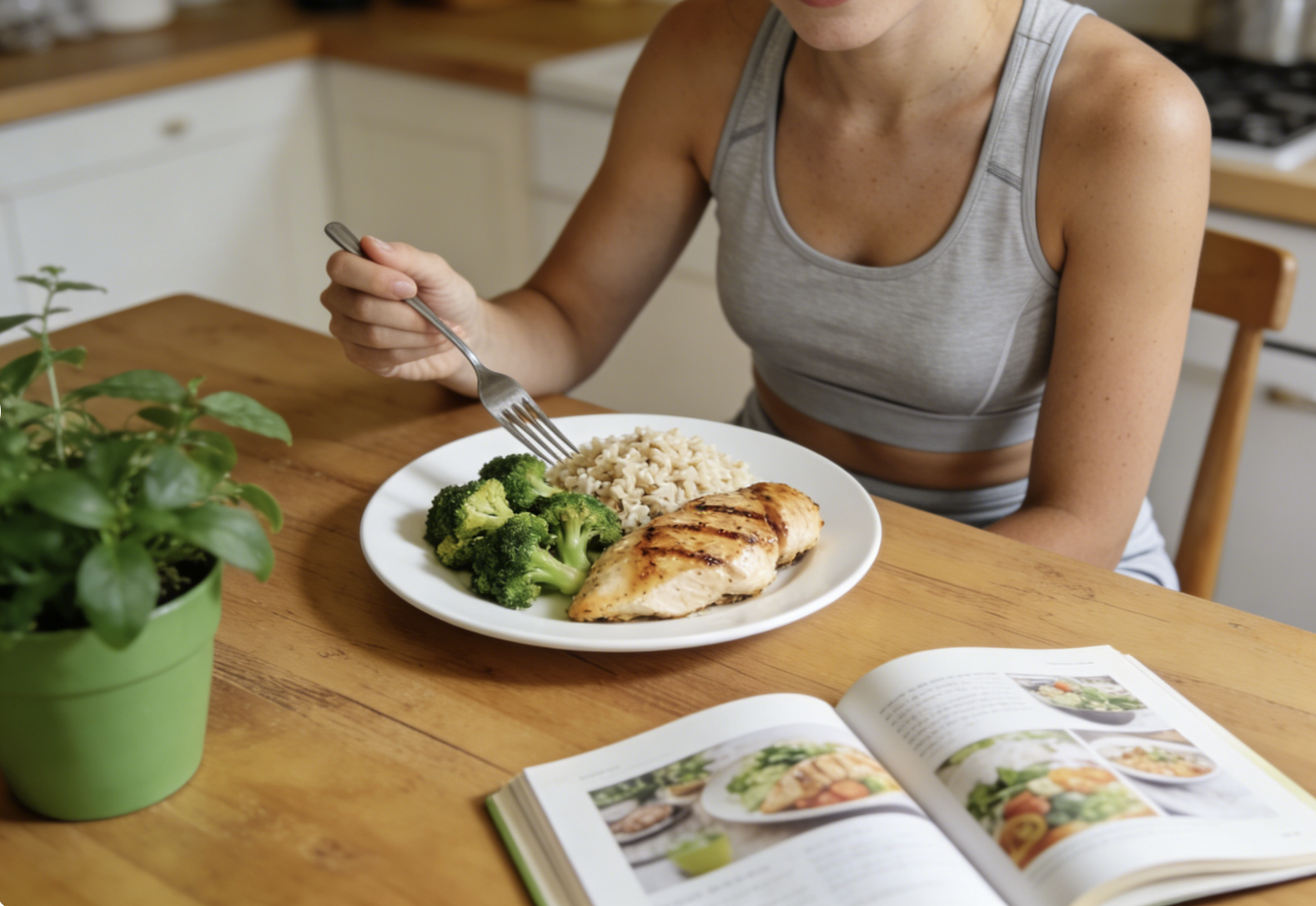
Weight Loss: Understanding the Nutritional Value of Various Foods and Scientifically Combining Diets for Healthy Fat Reduction
Understand the nutritional value of grains, meats, fruits, vegetables, and other foods, and combine them reasonably to achieve a balanced diet, aiding in weight loss. Eat nutritiously while controlling weight, making weight loss more scientific and sustainable.
2026-03-31