
Key Points of Scientific Fitness Running for Safe Fat Reduction Without Injury
The organism is constantly in a variable state during exercise, increasing the intensity of the actual stimulus and exacerbating oxygen deficiency, thus providing beneficial stimulation to the central nervous system, cardiovascular system, respiratory system, and muscular system. For individuals aged 15-30, it is best to adopt a variation in pace, alternating between fast and slow runs, sprinting a few steps and then slowing down, as this yields more significant results.
Children can also practice jogging, but the distance should be shorter than that of adults. Children are in a stage of growth and development; their organs and systems are not yet fully developed and cannot withstand sustained endurance training. Therefore, the distance and speed of jogging (long-distance running) for teenagers should not be too long, and the pace should not be too fast. It is also not advisable to practice at the same pace, and frequent competitions should be avoided.
What is the appropriate distance for children practicing long-distance running? Practice shows that children aged 8-10 can run about 400 meters, children aged 11-14 can run about 1000 meters, and teenagers aged 15-17 can increase to about 1500-2000 meters. After age 18, their bodies are close to adulthood and basically mature, allowing them to participate in longer distance training and competitions like adults.
Patients in the acute phase of bronchitis, pneumonia, emphysema, active tuberculosis, hypertension, or heart disease should follow their doctor's advice when engaging in recreational running.
Several issues should be noted for mass recreational running:
First, prevent and treat abdominal pain. Abdominal pain usually refers to varying degrees of pain in internal organs during exercise. Abdominal pain mostly occurs during training or competitions in long-distance running, long-distance race walking, and long-distance cycling. The causes and solutions for abdominal pain are as follows:
1. Prepare activities suitable for the needs of training (competition). The human body has a certain degree of inertia. The process of an organism transitioning from a resting to an active state is the process of overcoming this physiological inertia. The degree of inertia varies among different tissues and organs; internal organs have greater inertia than motor organs. It takes approximately 3 minutes for internal organs to transition from a resting to an active state, while motor organs take only 24-26 seconds—a difference of 7-8 times. Therefore, when motor organs (muscles) are fully stretched but internal organs have not yet adapted, a temporary imbalance in coordination between tissues and organs occurs, leading to discomfort or pain in the internal organs. Some people engage in strenuous exercise without warming up, which not only easily strains muscles and ligaments but also easily causes abdominal pain. Therefore, before running, especially before starting at a fast pace, it is essential to jog slowly, do some light exercises, practice deep breathing, and massage the abdomen first. This can help prevent abdominal pain during running.
2. Running can cause abdominal pain due to the up-and-down movement of the body pulling on the mesentery, increasing its tension. A large amount of blood pools in the liver and spleen during running, causing temporary enlargement and stretching of the liver and spleen capsules, resulting in abdominal pain (often below the ribs). The up-and-down movement of the body's center of gravity and slight lateral rotation during running accelerates gastrointestinal motility, causing food or other substances in the stomach and intestines to expand, also leading to abdominal pain (often in the right lower abdomen). If you experience pain in these areas while running, gently press the painful area and slow down your running speed, coordinating with long, rhythmic breathing; the pain will gradually lessen or disappear.
3. Shallow and frequent breathing can also cause respiratory muscle spasms, resulting in a side stitch. Therefore, during long-distance running, breathing should be even, natural, and consistent with the running rhythm. If you only focus on rapid breathing without aiming for deep, rhythmic breathing, your respiratory muscles will spasm due to prolonged lack of relaxation, leading to pain under your ribs or on both sides of your chest. If this happens while running, take a deep breath and hold it, while gently tapping your chest with your hands in a semi-fist position. Then slowly take several deep breaths, paying particular attention to forcefully exhaling. The pain should lessen or disappear after a while.
4. Inhaling cold air can also irritate the stomach and intestines and cause abdominal pain. Some long-distance runners don't breathe through their nose or mouth, but instead inhale deeply through their mouths. This breathing method is unhygienic and allows cold air to directly enter the alveoli, causing pulmonary vasoconstriction, impaired blood circulation, chest tightness, chest pain, and even strong, irregular peristalsis in the stomach and intestines, resulting in radiating abdominal pain. In such cases, use proper breathing techniques.
5. Eating too much or running vigorously immediately after a meal can also cause abdominal pain due to the pulling action of food in the stomach. Therefore, strenuous exercise should be avoided 1-2 hours after meals (except for slow-paced running for weight loss).
6. Intestinal parasites. During running, the increased gastrointestinal motility may disturb these parasites, causing abdominal pain. This type of pain is localized and has a twisting, pulling sensation. Prevention involves taking targeted medication to kill the parasites.
7. Certain chronic diseases can also trigger abdominal pain during running. Therefore, patients with tracheitis, bronchitis, etc., should follow their doctor's advice before running.
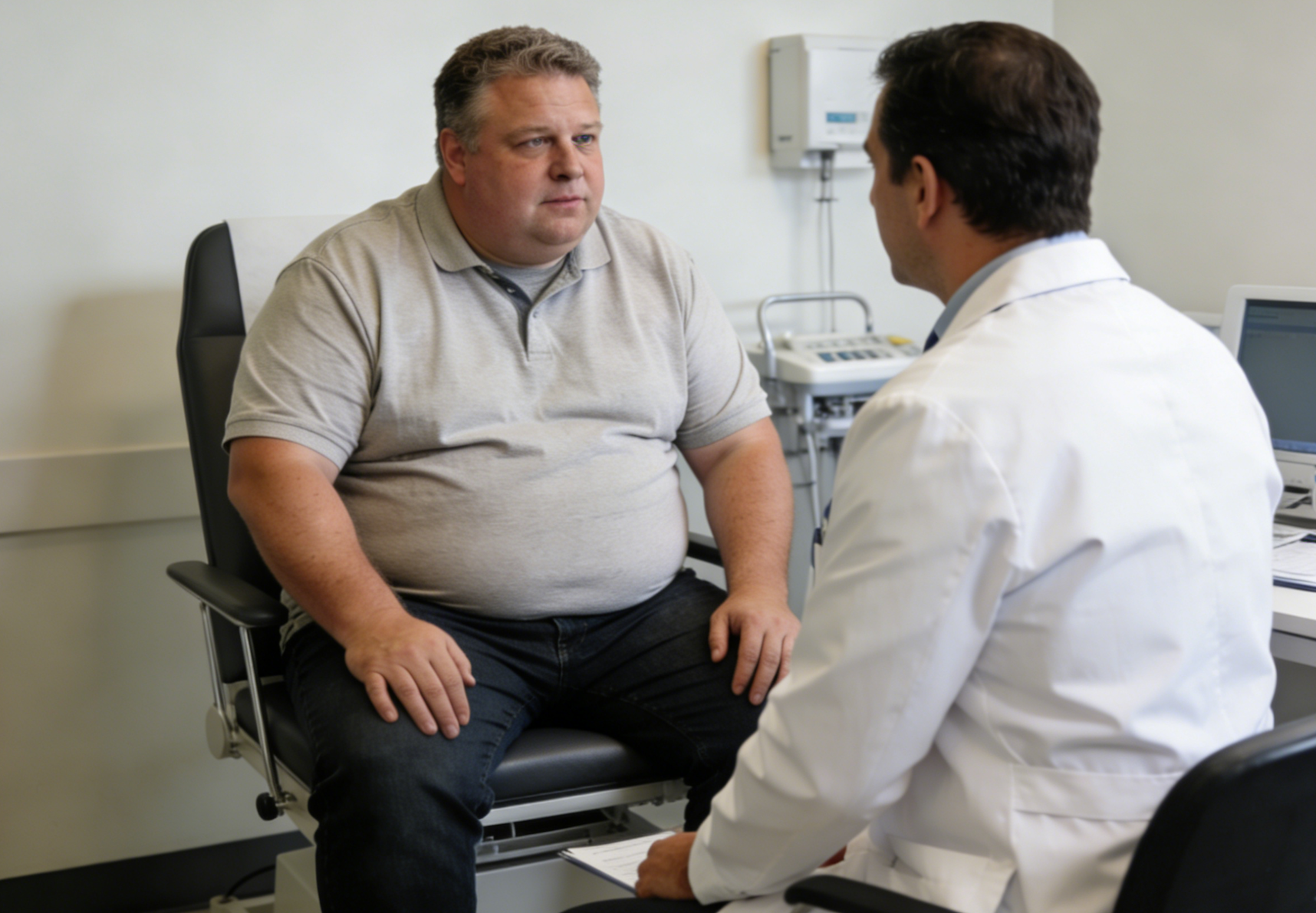
Ultrasonic liposuction: Using ultrasound technology to achieve precise weight loss and body shaping.
This article provides a detailed analysis of ultrasonic liposuction, an advanced technique that uses ultrasonic energy to selectively liquefy fat cells for localized fat reduction. This method effectively reduces the amount of fat and is suitable for those with localized fat deposits, making it a scientifically sound choice for precise weight loss and body sculpting. Ultrasonic liposuction enhances the safety of the procedure by preserving blood vessels and nerves.
2026-03-16
Scientific weight loss: The key to reducing the risk of obesity complications such as hyperlipidemia
This article elucidates obesity as a risk factor for various diseases such as hyperlipidemia and hypertension, and focuses on introducing non-drug therapies for scientific weight loss through diet control and regular exercise. Effective weight loss is not only the core of weight management, but also the fundamental way to prevent and improve these obesity-related complications and achieve a healthy life.
2026-03-19
Principles of drug treatment and scientific weight loss strategies for obesity complicated with hyperlipidemia
This article elucidates the principles of drug treatment for obesity complicated by hyperlipidemia, focusing on core treatment goals such as lowering LDL cholesterol and medication standards. Drug therapy, as an important component of a scientific weight loss plan, aims to manage and control obesity-related complications. Adhering to the principles of rational drug use is a key link in achieving safe and effective weight loss and promoting overall health.
2026-03-16