
Weight Loss and Belly Fat Reduction: Scientific Exercise for Fat Burning, Muscle Building, and Efficient Fat Reduction
I. It can change the ratio of muscle to fat. Experiments have shown that 1 kilogram of fat is approximately equal to 8000 kilocalories. Physical exercise can consume excess calories, maintaining a balance between calorie supply and demand, thus achieving weight loss. This was proven through repeated experiments by renowned American medical expert Lawrence Bauer. Bauer divided obese participants into two groups, A and B, both obtaining 1000 kilocalories daily from food. Group A engaged in half an hour of walking exercise daily, while Group B did not exercise. After two months, Group A lost an average of 10.4 kilograms, while Group B lost an average of 9 kilograms. Although the average weight loss differed by only 1.36 kilograms between the two groups, the change in the ratio of muscle to fat in both groups was very significant and directly influenced subsequent changes. By comparing the total amount of body fat and muscle before and after the experiment in groups A and B, group A experienced an average reduction of 11.35 kg of fat, while muscle increased by 0.9 kg; group B experienced an average reduction of 5.44 kg of fat, while muscle decreased by 3.6 kg. Muscle tissue has a very high metabolic rate and consumes more calories. With a decrease in total muscle mass, the calories consumed also decrease, making it easier for the body to absorb more calories than it burns, leading to fat accumulation and weight gain.
Secondly, the size of fat cells can be increased. Medical experts have determined that the length of fat cells in normal individuals is 87-98 micrometers, and each fat cell contains approximately 0.6 micrograms of fat; while the length of fat cells in obese individuals is 130 micrometers, and each fat cell contains as much as 1.2 micrograms of fat. The length of fat cells in obese individuals is 1.3-1.8 times that of normal individuals, and each fat cell contains twice the amount of fat. This is the fundamental reason for the bloated appearance of obese patients. Regular physical exercise, especially periodic aerobic exercise, can significantly stimulate the metabolism of fat cells, reducing their size and eliminating a bulky appearance. The well-built physiques and slender legs of middle- and long-distance runners are the best examples.
Third, it can reduce body fat content. Most people actually consume more calories than they burn from their daily meals (excluding snacks). If they lack physical activity, the accumulation of body fat will increase. Calorie expenditure occurs not only during exercise but also for several hours afterward, accelerating metabolism. Dr. Wood's research in the United States has shown that a person who walks 10 kilometers daily, even if they consume an extra 6000 kcal from food, will still weigh 20% less than a sedentary person. This is because physical activity burns a large amount of calories, and even 15 hours after exercise, 12-30% more calories are burned than inactive individuals. If a person exercises twice a day, morning and evening, they will burn more calories every minute of every 24 hours (including sleep time) than someone who doesn't exercise. For an obese patient, the more calories burned, the more body fat is reduced. This is because muscle exercise can improve the neuroendocrine system's regulation of metabolism, promoting fat breakdown. Muscle exercise requires a large amount of energy, and the energy needed for short-term vigorous exercise is mainly provided by burning glucose. During exercise, muscles enhance the uptake and utilization of free fatty acids in the blood, and the blood accelerates the release of free fatty acids from fat cells to replenish them, thereby reducing body fat and weight. Muscle exercise can also improve the utilization rate of glucose in the blood, preventing excess sugar from being converted into fat, thus reducing fat formation.
Reducing body fat can prevent complications caused by fat deposition in solid organs (heart, blood vessels, liver, etc.).
Section 2: Principles of Choosing Exercises for Weight Loss
The concept of mass sports in the world today has undergone a dramatic change. Due to the needs of fitness and weight loss, the selection of exercise programs has become more scientific and simplified. This shift in mindset has led to corresponding changes in exercise methods and principles. For example, moderate exercise has replaced intense and strenuous exercise, and slow exercise has replaced prolonged competitive exercise. Given the needs of fitness and weight loss, the selection of sports programs should be based on the comprehensive development of physical qualities (speed, strength, endurance, flexibility, and agility), and should especially follow these principles:
I. Adapting to National Conditions There are many sports programs available. For those seeking fitness and weight loss, it is not advisable to try to do everything. It is essential to start with simplicity and practicality, selecting only 1-2 programs or a few movements, and adhering to one's own "exercise prescription" consistently over the years to achieve fitness and weight loss goals and benefit for life.
The selected programs should be targeted, simple, and applicable, taking into account both one's own actual situation and the national conditions of my country. Although my country's population composition is similar to that of some developed countries, due to different national conditions—such as per capita income, dietary structure, and leisure time—there are still significant gaps. Therefore, at the present stage, and even for a considerable period in the future, it is not possible to develop Western mass sports activities that require high conditions, long durations, and long distances, such as ultra-long-distance running, triathlons, leisure travel, gym equipment training, bowling, billiards, and golf. Instead, we can choose simple, low-condition, and effective sports, adding one or two more exercises (see Section 3 of this chapter) for practice.
II. Sports Possess Three Characteristics The "three characteristics" here refer to the periodicity, aerobic nature, and rhythmicity of sports. Sports with these three characteristics can mobilize large muscle groups, improving the function of the cardiovascular, respiratory, and endocrine systems, and promoting more intense fat metabolism. Fat, as an energy source, is normally only consumed by the heart muscle. Only during prolonged and vigorous exercise, when glycogen stores are depleted and the body faces an energy crisis, does skeletal muscle begin to burn fat. In this situation, the process of fat depletion is very intense, with 80% of the required energy provided by fat breakdown. Therefore, people who want to lose weight regularly engage in periodic aerobic exercise, which not only burns more calories and reduces fat accumulation but also significantly lowers cholesterol levels and improves blood vessel patency, achieving both weight loss and fitness goals.
III. Resistance Exercise
Resistance exercise refers to strength training to develop muscles. There are many resistance exercise exercises (movements), such as gymnastics with equipment, weightlifting, push-ups, pull-ups, dips, sit-ups, hanging leg raises, etc.
Less muscle activity and decreased muscle strength inevitably affect overall health. Decreased muscle strength leads to reduced vascular tension, weak myocardial contraction, and reduced stroke volume, thus primarily impacting the heart. Therefore, strengthening muscle power training is essential not only for teenagers but also for middle-aged and elderly people. From a weight loss perspective, the best way to develop strength is to train using 25-50% of your maximum strength for optimal results. This type of exercise, with light weights and high repetitions, not only develops strength and increases endurance but also thickens red muscle fibers. Red muscle fibers are surrounded by numerous capillaries, making them highly effective at oxidizing fat; continuous contractions result in greater fat consumption. Strength training should not only be rhythmic and dynamic but also concentric (exercising both the heart and lungs simultaneously) to benefit both muscles and the cardiovascular system, thus helping to build and maintain a lean physique.

A Comprehensive Analysis of the Causes of Obesity and Effective Weight Loss Strategies
This article systematically analyzes the root causes of obesity, pointing out that calorie intake exceeding expenditure is the core reason for weight gain, and analyzes the influence of factors such as genetics, dietary structure, and insufficient exercise. Understanding these mechanisms helps in developing scientific weight loss strategies, effectively controlling weight, and improving health.
2026-03-12
How does exercise affect energy metabolism? The key to scientifically planning and improving weight loss results.
This article provides an in-depth analysis of how exercise can aid in weight loss by increasing basal metabolic rate, boosting calorie expenditure, and optimizing body composition. Understanding the complex effects of exercise on energy metabolism helps in scientifically planning exercise programs, effectively achieving healthy weight loss, and avoiding ineffective workouts.
2026-03-13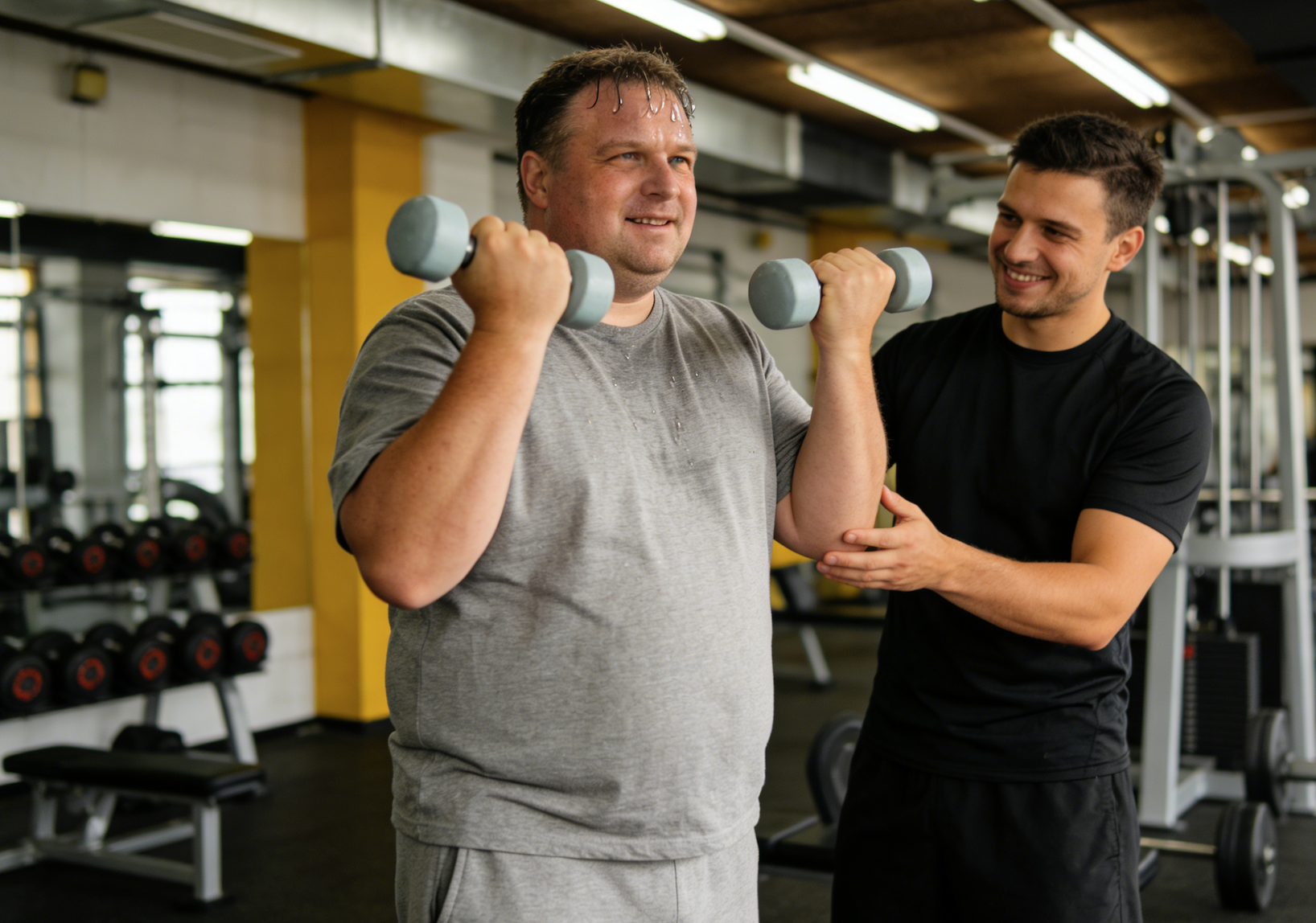
How does exercise regulate cholesterol metabolism? The link between weight loss and health.
This article explores the effects of exercise on cholesterol metabolism, particularly its regulatory role in high-density lipoprotein (HDL-C) and low-density lipoprotein (LDL-C). Studies have shown that long-term exercise can increase HDL-C levels and decrease LDL-C, thereby supporting cardiovascular health. Optimizing cholesterol levels through scientific exercise not only aids in health management but also promotes scientific weight loss. Appropriate exercise is one of the key pathways to achieving weight loss goals and improving metabolism.
2026-03-13