
Weight Loss: Focusing on Abdominal Fat Reduction, Scientific Exercise for a Healthy Body
III. Targeting Abdomen for Fat Reduction
People often use the term "beer belly" to describe overweight individuals. This, to some extent, indicates that fat accumulation is concentrated in the abdomen. Weight gain often begins in the abdomen. This is because after the sugar in food is broken down, it becomes glycogen, the body's energy source, stored in the liver for use in muscle activities. The remaining glycogen is converted into fat and accumulates in the abdomen, buttocks, shoulders, and thighs near the stomach and intestines.
From a physiological and anatomical perspective, fat in the human body is stored in three locations: First, subcutaneous tissue, accounting for more than 50% of the total storage. Second, the greater omentum, which covers the abdominal wall and surrounds the intestines. Third, the area around some internal organs, such as the heart and kidneys. Subcutaneous fat is mainly distributed in the shoulders, abdomen, around the navel, lower abdomen, buttocks, thighs, knees, and above the inner ankle. Among these, the buttocks and waist are the most prone to fat accumulation, followed by the area around the navel and lower abdomen, and then the shoulders, thighs, and knees.
Studies have shown that men tend to accumulate fat in higher parts of the body, such as the abdominal cavity, while women tend to accumulate it in lower parts, such as the lower abdomen, buttocks, upper thighs, and inner thighs. CT scans reveal that in two men and women with similar levels of obesity, the man's fat is mostly distributed below the muscle wall (within the abdominal cavity, around the intestines and other organs), while the woman's abdominal fat is mostly distributed subcutaneously (between the skin and muscle wall).
Which part of the body accumulates fat more harmful to health? Domestic and international medical experts have proven that fat accumulated in the waist and abdomen poses a greater risk to health and longevity.
A Swedish medical expert, after more than 20 years of research on the relationship between waist circumference, hip circumference, and heart disease, has proven that the larger the waist-to-hip ratio, the greater the risk of sudden death from heart disease. Compared to people with uniform obesity throughout the body, those with lumbar obesity have a 3-4 times higher rate of myocardial infarction and stroke. He conducted follow-up studies on 885 men and 1482 women for 20 and 12 years respectively. The results showed that 20% of men aged 50 who were obese in the waist and abdomen but relatively thin had a risk of death before age 70; while only 5% of obese men with relatively small waist circumferences had a risk of death before age 70. For obese men, a waist circumference equal to their hip circumference is the most dangerous; for women, a waist circumference reaching 80% of their hip circumference significantly increases the risk of heart disease.
The findings of American medical experts on the relationship between waist circumference, hip circumference, and blood pressure are similar to those of Swedish medical experts. In 1988, the U.S. National Center for Health Statistics conducted a large-scale nationwide survey, with a particularly detailed focus on adolescents during puberty. They spent eight years repeatedly tracking and measuring the waist circumference, hip circumference, and systolic blood pressure of adolescents. The results showed that a higher waist-to-hip ratio was associated with higher systolic blood pressure. Therefore, they urgently urged adolescents with abdominal obesity to lose weight to prevent cardiovascular disease in adulthood.
Modern medical research has proven that abdominal obesity does not contribute to health and longevity. Fat cells accumulated in the waist and abdomen are the most active, easily entering the bloodstream and reaching the liver. When the liver encounters high levels of free fatty acids, it accelerates the synthesis of very low-density lipoprotein (VLDL) and sends it into the bloodstream, from where it is transported to the heart and lungs. Some of this VLDL becomes harmful cholesterol, a factor contributing to cardiovascular disease. Normally, people with a higher waist-to-hip ratio are more likely to lower their cholesterol and blood pressure when they lose weight compared to those of normal weight. Therefore, weight loss should be targeted, with the primary task being to change the ratio of fat to muscle in the waist and abdomen. The only way to change the ratio of fat to muscle in the waist and abdomen is to consistently strengthen the abdominal muscles; there is no other way.
The Benefits of Exercise for Weight Loss
Yan Yuan (1635-1704), a great thinker and educator in the early Qing Dynasty of my country, proposed the idea that "movement strengthens the body." The great French thinker Voltaire also famously said, "Life lies in movement." The renowned Greek writer and historian Plutarch referred to physical activity as "the storehouse of life."
Chairman Mao Zedong, using the pen name "Twenty-Eight Strokes," in his article "A Study of Physical Education," attributed the benefits of physical education to "strengthening muscles and bones, thereby increasing knowledge, thereby regulating emotions, and thereby strengthening willpower. Muscles and bones are our body; knowledge, emotions, and willpower are our mind. When both body and mind are at ease, it is called harmony. Therefore, physical education is nothing more than nourishing our lives and bringing joy to our hearts." These statements scientifically, dialectically, and objectively elucidate the multifaceted functions of physical exercise and physical activity, including biological, social, and psychological aspects. Obese patients often have weakened or incomplete cardiac function, and even slight activity can reduce their risk of weight loss. This means an increased heart rate. Physical exercise can gradually strengthen the heart muscle's contractile force, improve and enhance cardiac function, and increase the elasticity of blood vessels and the dynamics of blood circulation. Muscle exercise can also improve blood circulation and reduce extracardiac factors, such as accelerating the return of peripheral blood to the heart, thus reducing the burden on the heart and improving its adaptability to physical activity and exercise.
Obese people also often have relative respiratory insufficiency and may experience shortness of breath when they first participate in physical exercise. Regular physical exercise, especially aerobic activities (walking, running, swimming, cycling, etc.), can improve respiratory muscles, increase the range of motion of the thoracic cavity and diaphragm, increase breathing depth, increase lung capacity, and improve pulmonary ventilation.
By consistently engaging in physical exercise, obese individuals can improve and enhance cardiopulmonary function while reducing subcutaneous and visceral fat, thus achieving weight loss.

Weight Loss: Understanding the Genetic Patterns of Obesity and Scientifically Combating Genetic Influence
Understanding the impact of genes on appetite, metabolism, and weight; improving physical condition through a low-fat diet and regular exercise to aid weight loss; and scientifically addressing genetic factors for more stable and effective weight loss.
2026-03-16
Weight Loss: Regulating Appetite and Insulin, Scientific Diet Control for Easy Fat Reduction
Through a reasonable diet, exercise, and habit adjustments, stabilize insulin, control excessive appetite, reduce fat accumulation, and aid in weight loss. Gentle, healthy, and easy to maintain, making weight loss more efficient and preventing rebound.
2026-03-16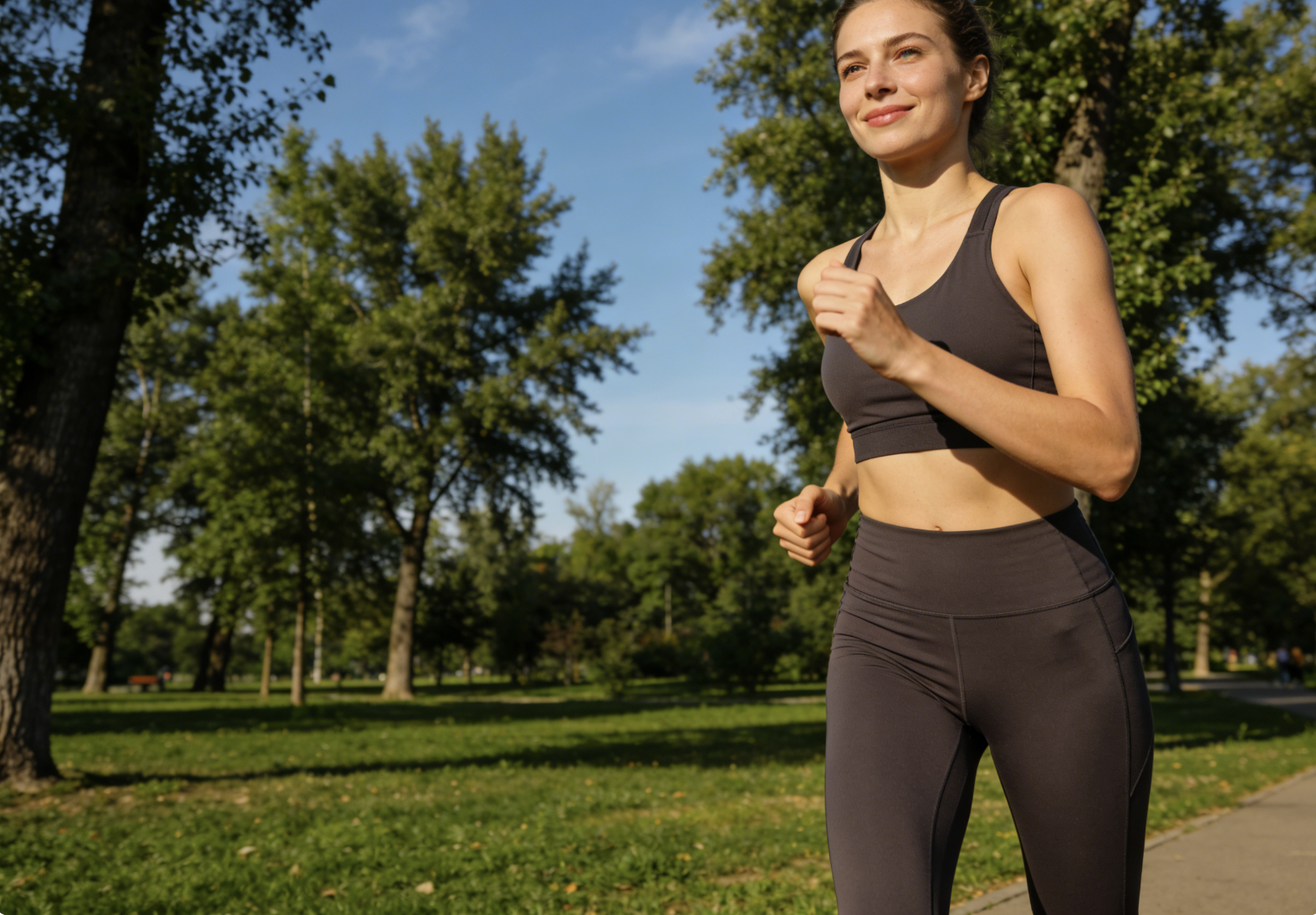
Weight Loss: Boost Basal Metabolism and Scientifically Combat Fat-Prone Body Types
Understand the laws of genetics, metabolism, and fat storage. Improve metabolic efficiency through diet, exercise, and muscle building to aid in weight loss. Achieve gentle fat loss without rebound, making weight loss more suitable for your individual body type.
2026-04-02